
· · Fenxi tech admin · Blog · 4 min read
Transforming Usage into Lasting Habits: Gamification in Apps
The Subtle Echo: Transforming Usage into a Lasting Habit
Let’s be honest: you downloaded this app with impeccable resolve, but now it’s just another icon in the long list of forgotten apps. The true victory, the one that defines a platform’s success, is never the first installation click. It’s measured over time. The fundamental challenge isn’t raw utility, but the ability to integrate into a user’s life, to become a non-negotiable habit.
This is where gamification deploys its influence. Far from being a simple aesthetic add-on, it represents a strategic response deeply rooted in human psychology, aimed at transmuting a necessary task into an engaging ritual.
The Psychological Foundations of Gamification
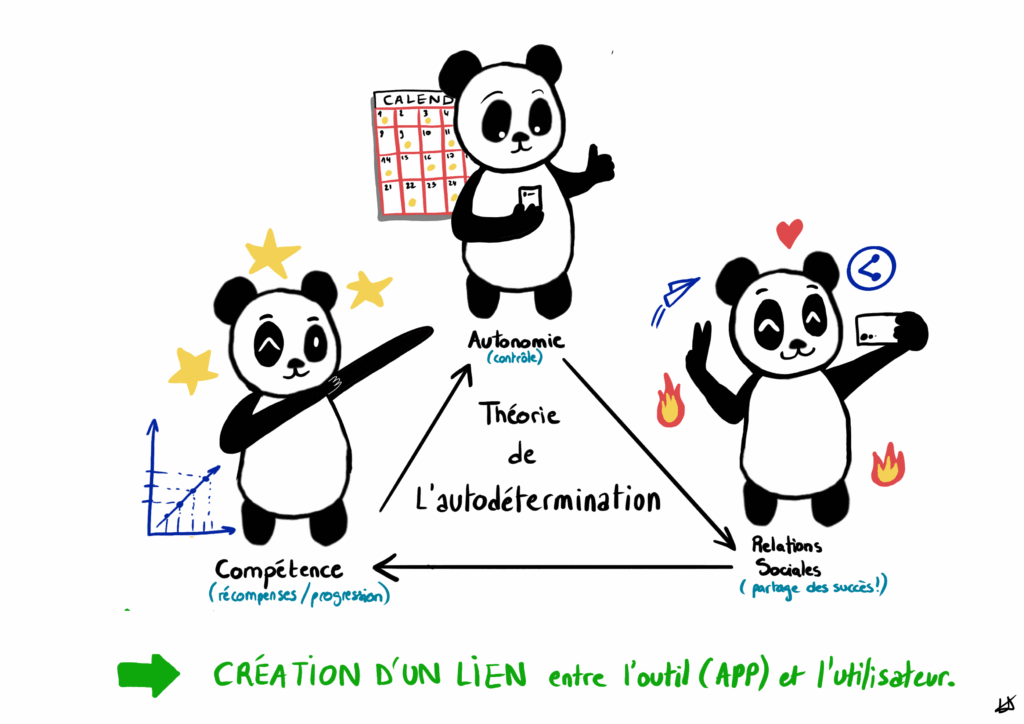
The foundation of this discipline rests on the Self-Determination Theory (SDT), a validated model that identifies the intrinsic levers of motivation. This theory posits the existence of three fundamental psychological needs that any user experience must satisfy to cement a lasting relationship:
- Competence: The need to feel tangible progression, to master a new feature, or to complete a task.
- Autonomy: The necessity to exert control, to personalize one’s environment, or to define one’s own path of engagement.
- Social Relatedness: The need for connection, sharing successes, or collaborating within a community.
When an application successfully satisfies these three needs, its role transcends that of a mere tool; it creates a bond. A user who perceives themselves as competent, autonomous, and connected is not just retained; they are intrinsically and lastingly engaged.
As Nir Eyal, an expert in UX psychology, states:
« Giving users a bit of control, and variable rewards, is the key to creating ‘Hooked’ products. »
Essential Mechanics for User Retention: The Hook Model
Once the psychological « why » is established, it’s imperative to examine the practical « how. » Loyalty relies on the flawless execution of mechanics that form the engagement loop formalized by Nir Eyal in his book Hooked.
The example of learning apps like Duolingo or Superchinese is a masterful demonstration of this four-phase model, which is at the heart of any successful retention strategy:
- Trigger: The stimulus that initiates the action. It evolves from an external cue (notification, ad, word-of-mouth, featuring on an app store, a rewarded or promoted app) to an internal need (boredom, need for mastery). For example: a promoted podcast, a webtoon recommendation, an ad for learning a language.
- Action: The simple interaction required (a short lesson). For example: the need to master something and reduce boredom implies a simple action like downloading an app.
- Variable Reward: The central element that fuels anticipation. The application offers a variation of:
- Rewards of the Self (Maintained streaks, feeling good about ourselves for having accomplished something).
- Rewards of the Hunt (Unlocking content, gaining access to new information).
- Rewards of the Tribe (Badges, leaderboards, which engage a relationship with others).
- Investment: The more points or daily streaks a user accumulates, the more symbolic value the application gains. The effort metamorphoses into capital that one is incentivized to protect, reinforcing the return cycle—meaning coming back regularly to the tool/platform/app.
The impact on engagement is unequivocal:
The integration of a gamification strategy has demonstrated a significant impact, with brands reporting an increase in participant engagement of up to 47% (according to case studies like Deloitte, cited in various industry reports), which directly impacts retention and adoption.

Advanced Strategies for Deep Engagement
Moving beyond simple rewards leads to the higher objective: creating an emotional engagement that touches on Autonomy. An advanced strategy requires systems that value the individual.
Consider personalized quests and challenges. Using behavioral data to challenge a user to beat their own record on their usual route is a far more powerful lever than a generic goal. This personalization demonstrates an understanding of the user and honors their need for Autonomy.
The fundamental conviction of the modern digital economy is simple: you don’t monetize access; you monetize engagement. An invested user is naturally more inclined to spend. This conviction is corroborated by fundamental analyses on user experience:
- According to studies by Forrester Research, for every dollar invested in improving UX, the average return on investment is $100. Gamification, when mastered, becomes a major accelerator of this ROI, as it transforms interaction into perceived value, thereby justifying users’ financial engagement.
In conclusion, let’s recall this essential formula of trust design, attributed to designer and developer Colm Tuite:
« When the user experience is greater than the user expectation, trust is established. »
It is this trust, methodically built through design that respects the fundamental psychological imperatives of habit creation, that guarantees a presence that is simultaneously loyal, lasting, and profitable.