
· · Lucie Dewaleyne · Blog · 3 min read
80% of the features you ship are never used
TL;DR: close to 80% of SaaS features stay underused, and 30-40% are forgotten within 90 days (Pendo). The real lever isn’t building more, it’s measuring actual usage before prioritizing the next roadmap.
| Metric | Value |
| SaaS features rarely or never used | ~80% |
| New features forgotten within 90 days | 30-40% |
| Average adoption rate of a SaaS feature | 24.5% |
| Features unused simply due to lack of awareness | 64% |
| Adoption of top-performing B2B products (first 30 days) | 40-50% |
A product team shipping a new feature every two weeks feels like it’s moving fast. In most cases, that feeling is misleading: close to 80% of the features SaaS teams build see little to no use, according to Pendo. Between 30% and 40% of new features are forgotten within 90 days. The question is not just what you build, it’s whether anyone actually uses it.
Three features out of four go unnoticed
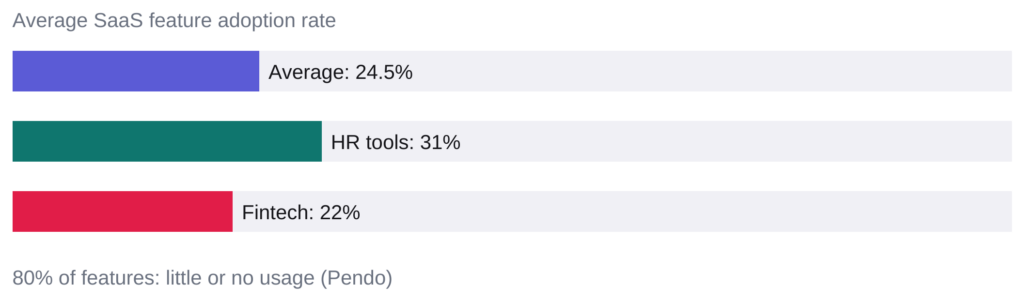
The average adoption rate for a SaaS feature sits around 24.5%. It climbs to 31% for HR tools and drops to 22% in fintech. Either way, that means most shipped features never reach most users. The reason is not always product quality: 64% of features stay unused simply because users don’t know they exist.
The hidden cost of a poorly prioritized roadmap
According to a Pendo report, companies spend an average of 30% of their engineering resources on features that never reach meaningful adoption. On a ten-person product team, that’s the equivalent of funding three full-time roles to build things nobody ends up using. That number says nothing about code quality or design, it points to a prioritization problem, not an execution one.
Teams that do better don’t guess, they measure
Top-performing B2B products reach 40 to 50% adoption on their core features, against 20 to 30% for the market average within the first 30 days. The gap doesn’t come from better product instinct, it comes from concrete mechanisms: contextual discovery of the feature at the right moment in the user journey, and continuous iteration based on actual usage rather than feedback from a handful of vocal users.
What a product audit actually reveals
A product audit starts by instrumenting what’s actually used, page by page, feature by feature, then compares that real usage against the development effort invested. In most cases, this exercise surfaces three groups: features that work and deserve more investment, ignored features that need better visibility or should be cut, and parts of the product that were never instrumented at all, invisible even to the team that built them.
Before starting the next quarter of development, knowing what’s actually used in the current product takes a few days of work. Continuing to guess costs a lot more, in engineering time and in missed opportunities.